Learn for free
Connect ideas with mind maps
Eight supply chain fundamentals maps, with central questions and four branches to organise your thinking. Translated text appears below each visual. Images and downloads remain in Portuguese; tap an image to enlarge.
Original introductory content on general topics also covered by CSCP modules 1–8. These maps do not reproduce course materials, questions or diagrams and do not replace the official programme. No affiliation with or endorsement by ASCM/APICS.
Map 1 of 8
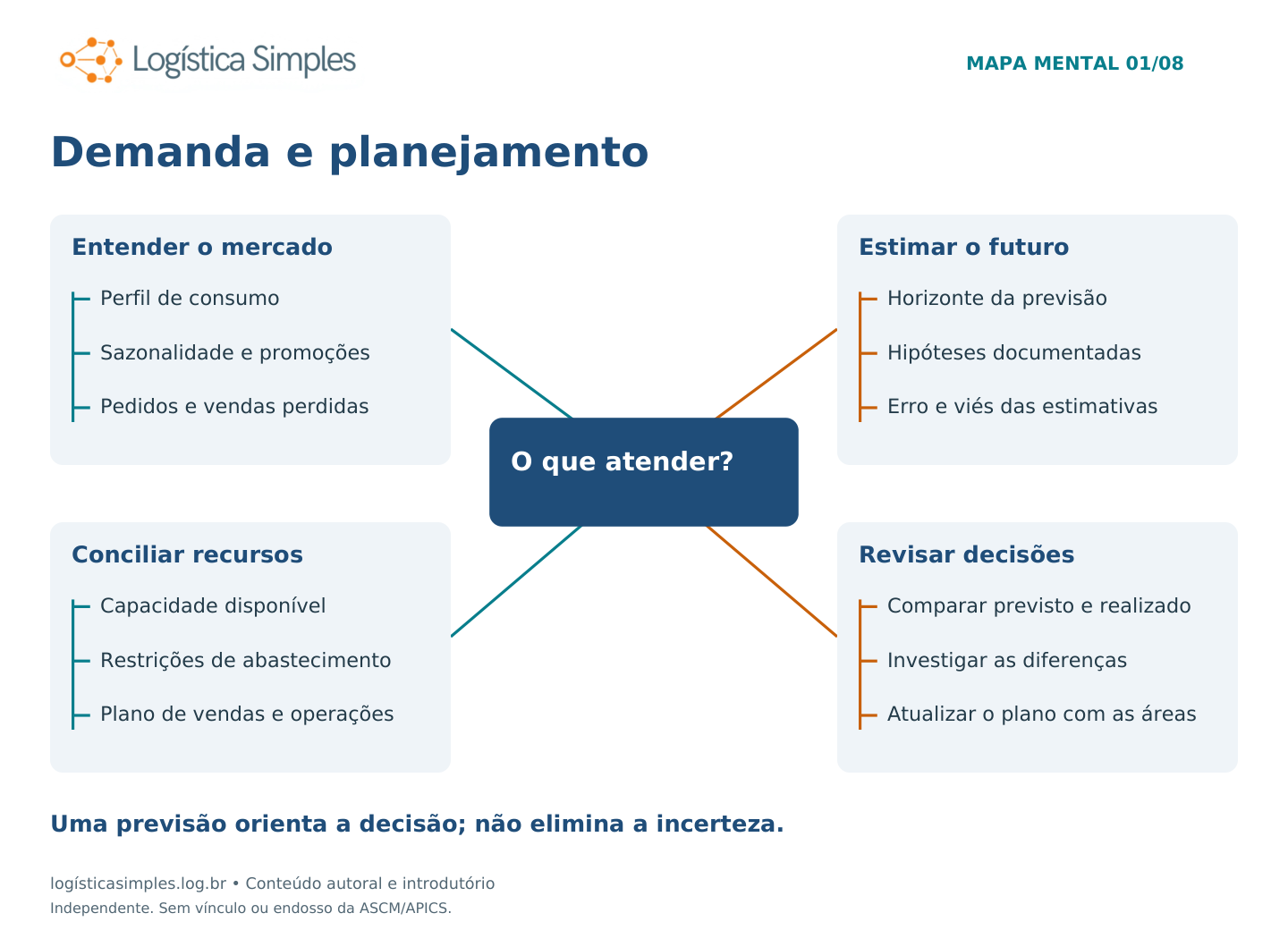
Demand and planning
Read the map branches
Understand the market
- Consumption profile
- Seasonality and promotions
- Orders and lost sales
Estimate the future
- Forecast horizon
- Documented assumptions
- Forecast error and bias
Align resources
- Available capacity
- Supply constraints
- Sales and operations plan
Review decisions
- Compare forecast and actual
- Investigate differences
- Update the plan across teams
A forecast guides decisions; it does not eliminate uncertainty.
Map 2 of 8
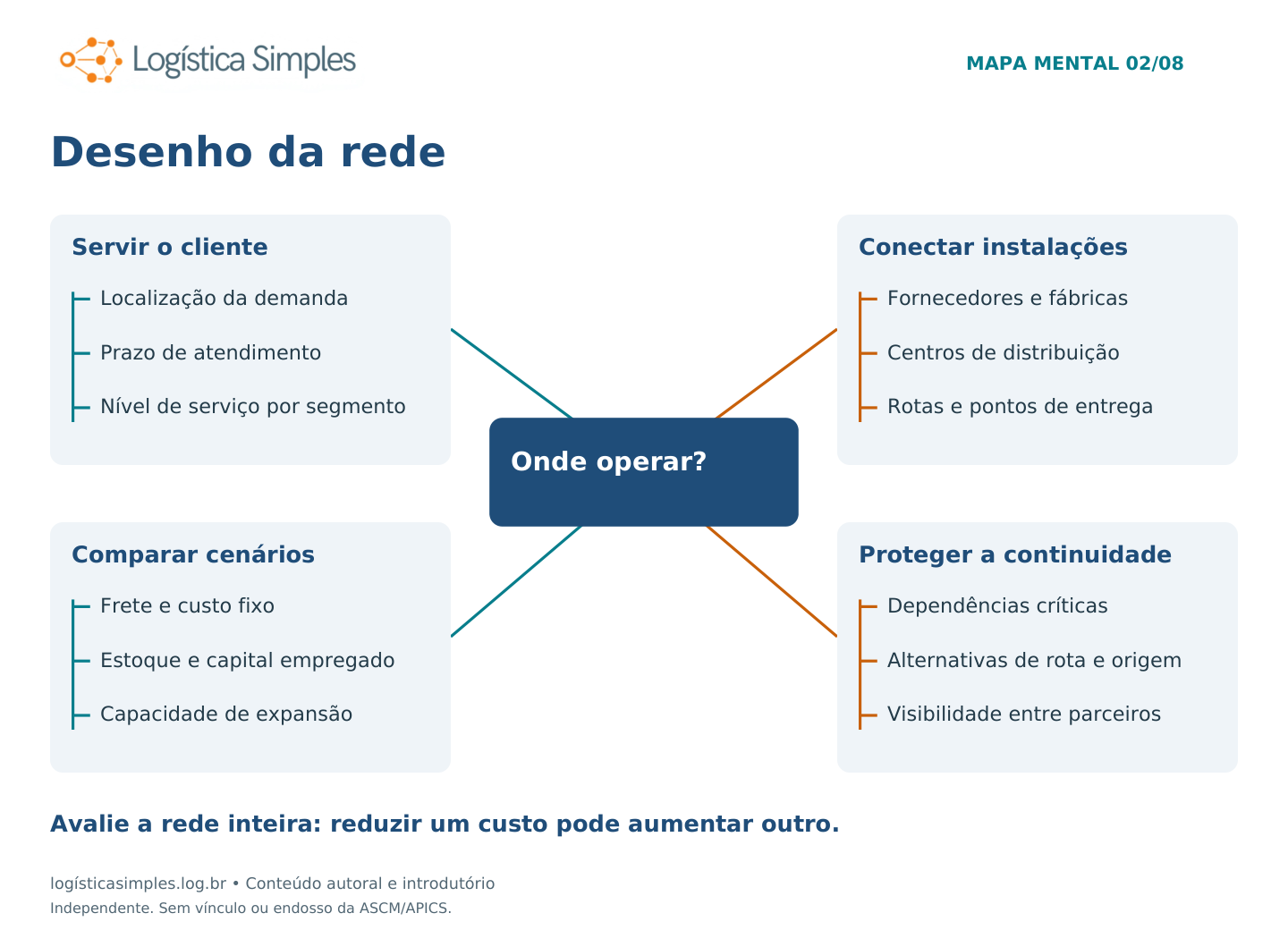
Network design
Read the map branches
Serve the customer
- Demand location
- Service lead time
- Service level by segment
Connect facilities
- Suppliers and factories
- Distribution centres
- Routes and delivery points
Compare scenarios
- Freight and fixed costs
- Inventory and capital employed
- Expansion capacity
Protect continuity
- Critical dependencies
- Alternative routes and sources
- Visibility across partners
Assess the whole network: reducing one cost can increase another.
Map 3 of 8
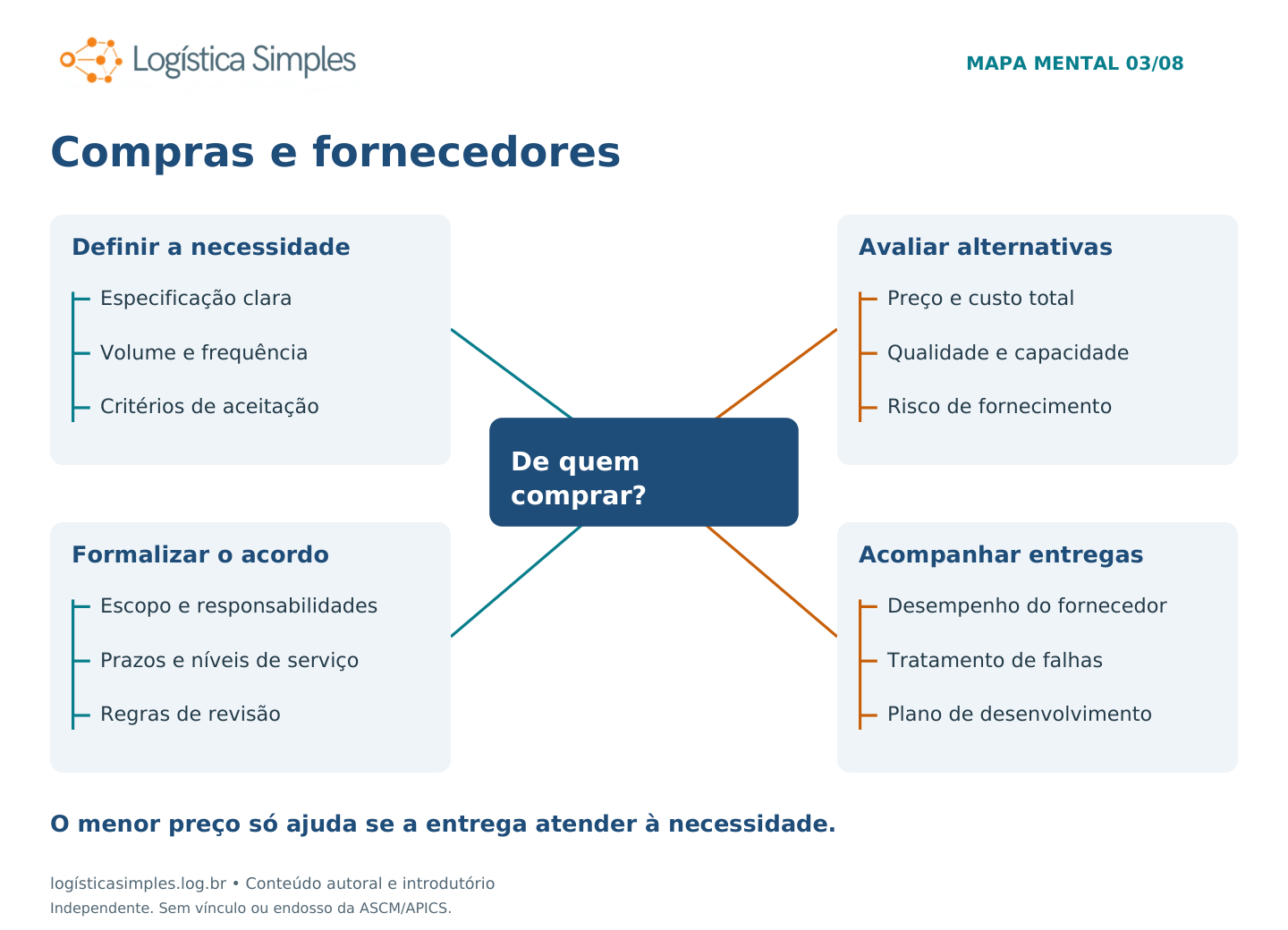
Procurement and suppliers
Read the map branches
Define the need
- Clear specifications
- Volume and frequency
- Acceptance criteria
Evaluate alternatives
- Price and total cost
- Quality and capacity
- Supply risk
Formalise the agreement
- Scope and responsibilities
- Lead times and service levels
- Review rules
Monitor deliveries
- Supplier performance
- Failure handling
- Development plan
The lowest price helps only if delivery meets the need.
Map 4 of 8
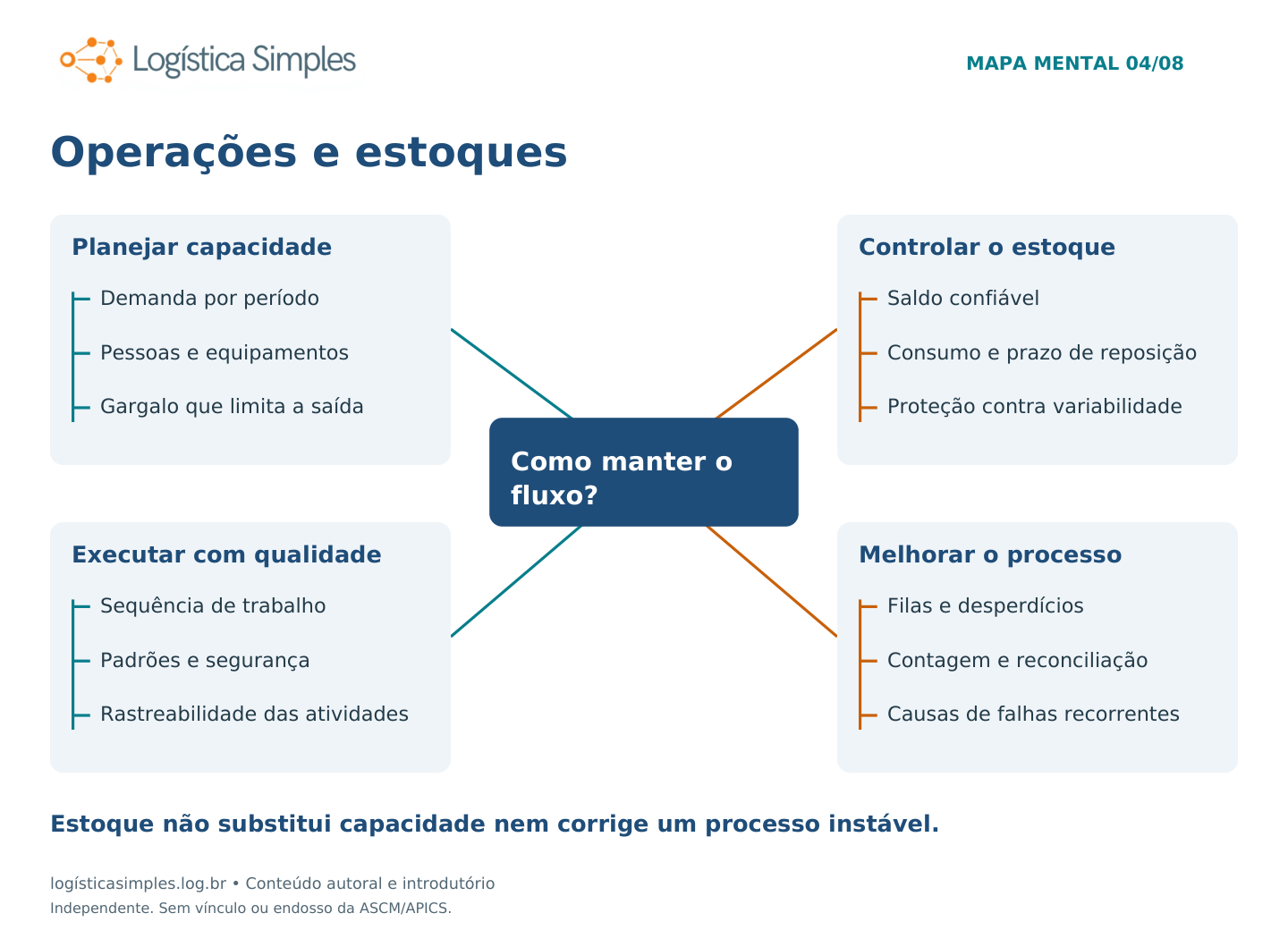
Operations and inventory
Read the map branches
Plan capacity
- Demand per period
- People and equipment
- The bottleneck limiting output
Control inventory
- Reliable stock balances
- Consumption and replenishment lead time
- Protection against variability
Execute with quality
- Work sequence
- Standards and safety
- Activity traceability
Improve the process
- Queues and waste
- Counting and reconciliation
- Causes of recurring failures
Inventory does not replace capacity or fix an unstable process.
Map 5 of 8
Deliveries and returns
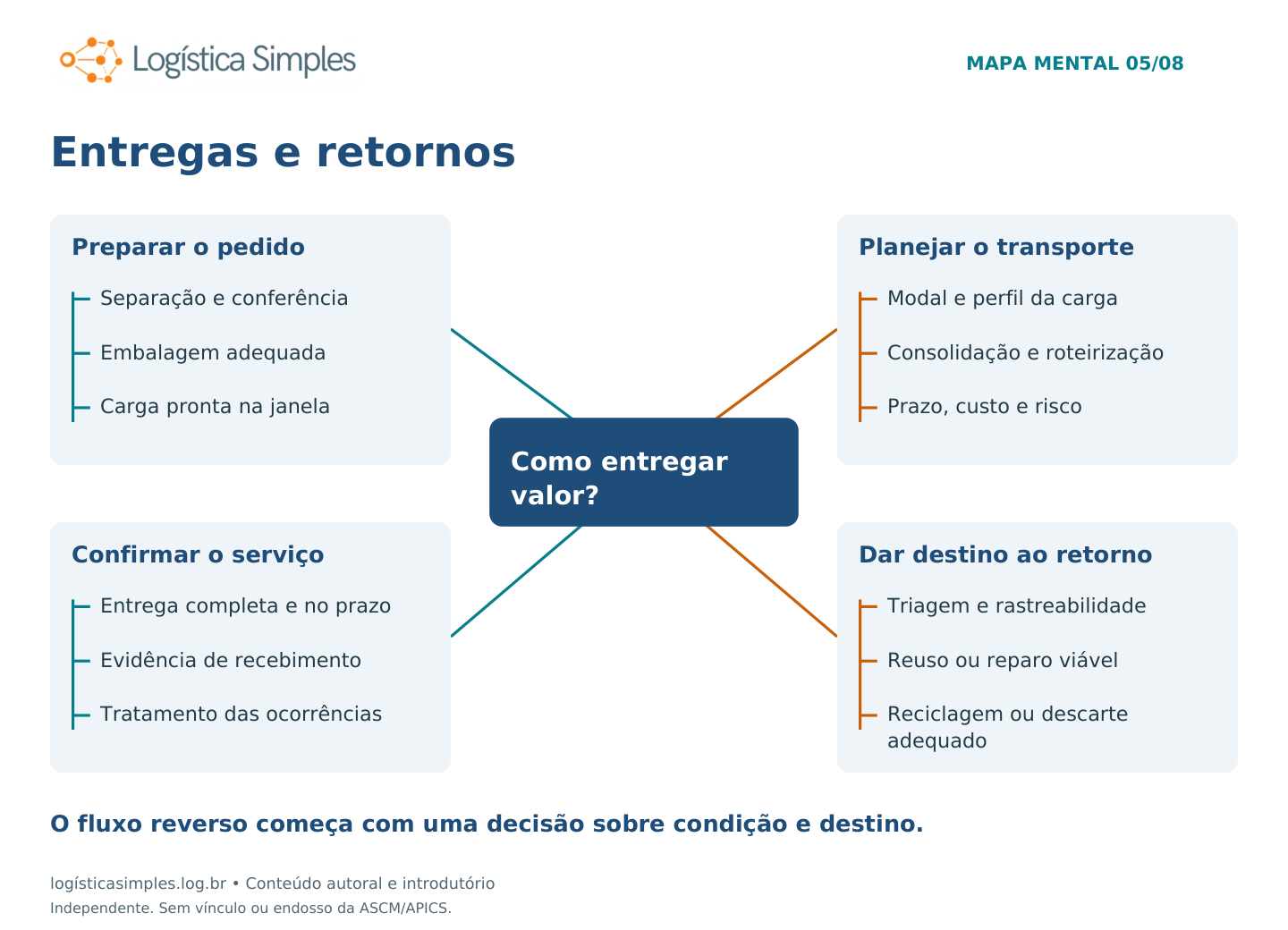
Read the map branches
Prepare the order
- Picking and checking
- Suitable packaging
- Load ready within the window
Plan transport
- Mode and cargo profile
- Consolidation and routing
- Time, cost and risk
Confirm service
- Complete, on-time delivery
- Receipt evidence
- Exception handling
Determine the return's destination
- Inspection and traceability
- Feasible reuse or repair
- Appropriate recycling or disposal
Reverse flow starts with a decision about condition and destination.
Map 6 of 8
Supply chain relationships
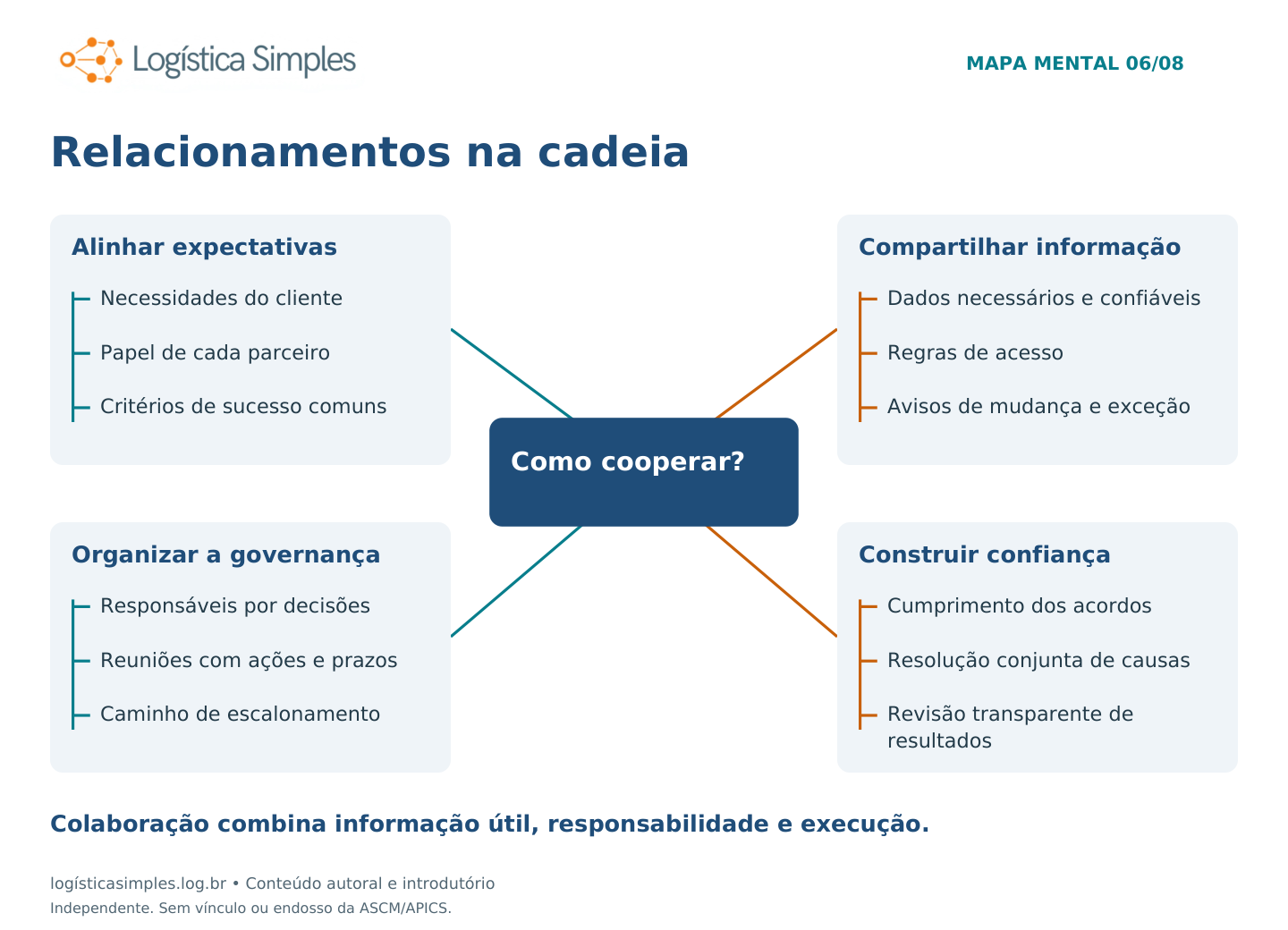
Read the map branches
Align expectations
- Customer needs
- Each partner's role
- Shared success criteria
Share information
- Necessary, reliable data
- Access rules
- Change and exception alerts
Organise governance
- Decision owners
- Meetings with actions and deadlines
- Escalation path
Build trust
- Honouring agreements
- Joint root-cause resolution
- Transparent performance reviews
Collaboration combines useful information, accountability and execution.
Map 7 of 8
Risk and continuity
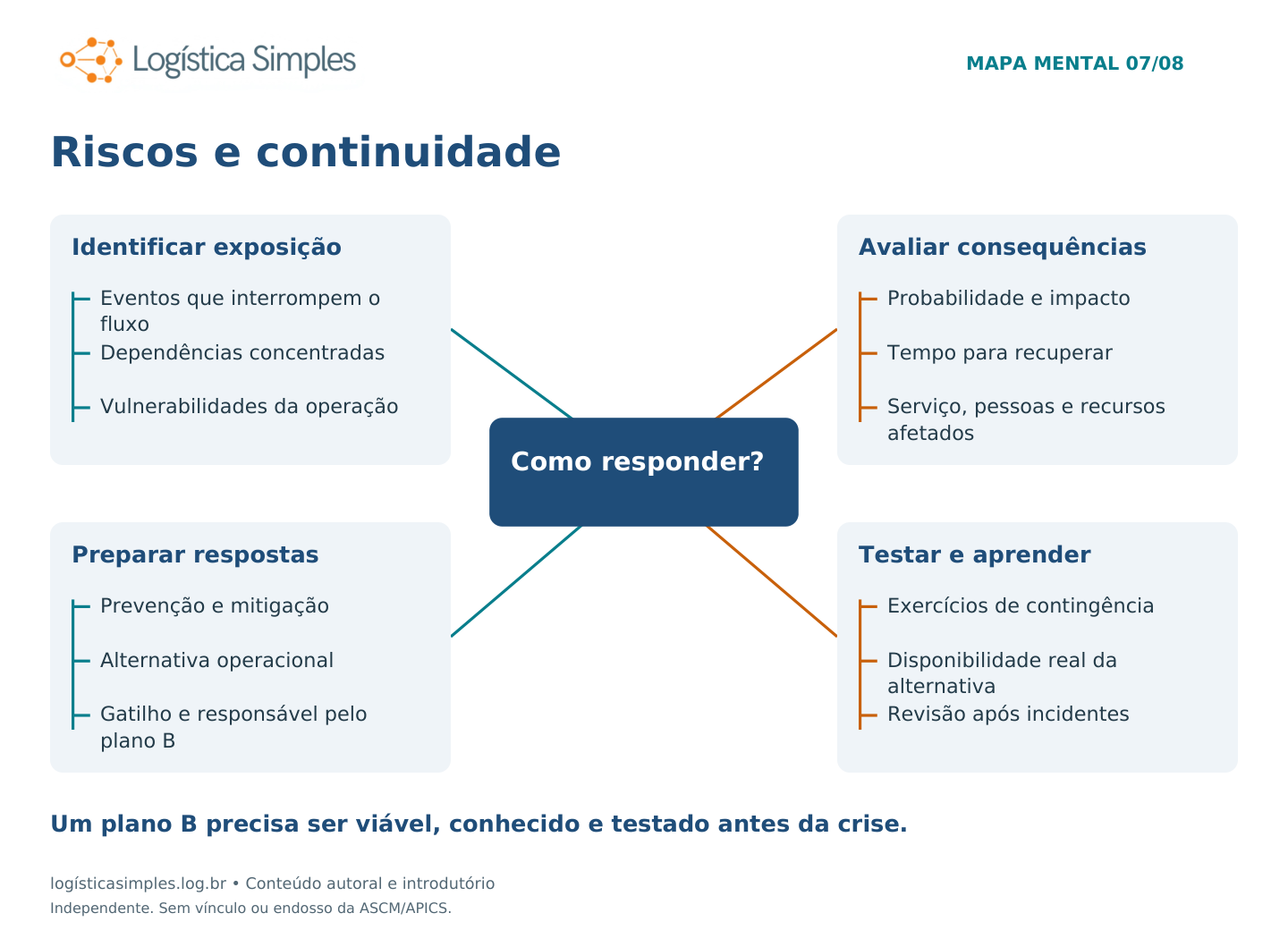
Read the map branches
Identify exposure
- Events that interrupt flow
- Concentrated dependencies
- Operational vulnerabilities
Assess consequences
- Likelihood and impact
- Recovery time
- Service, people and resources affected
Prepare responses
- Prevention and mitigation
- Operational alternative
- Plan B trigger and owner
Test and learn
- Contingency exercises
- Actual availability of alternatives
- Post-incident review
A plan B must be feasible, understood and tested before a crisis.
Map 8 of 8
Improvement and sustainability
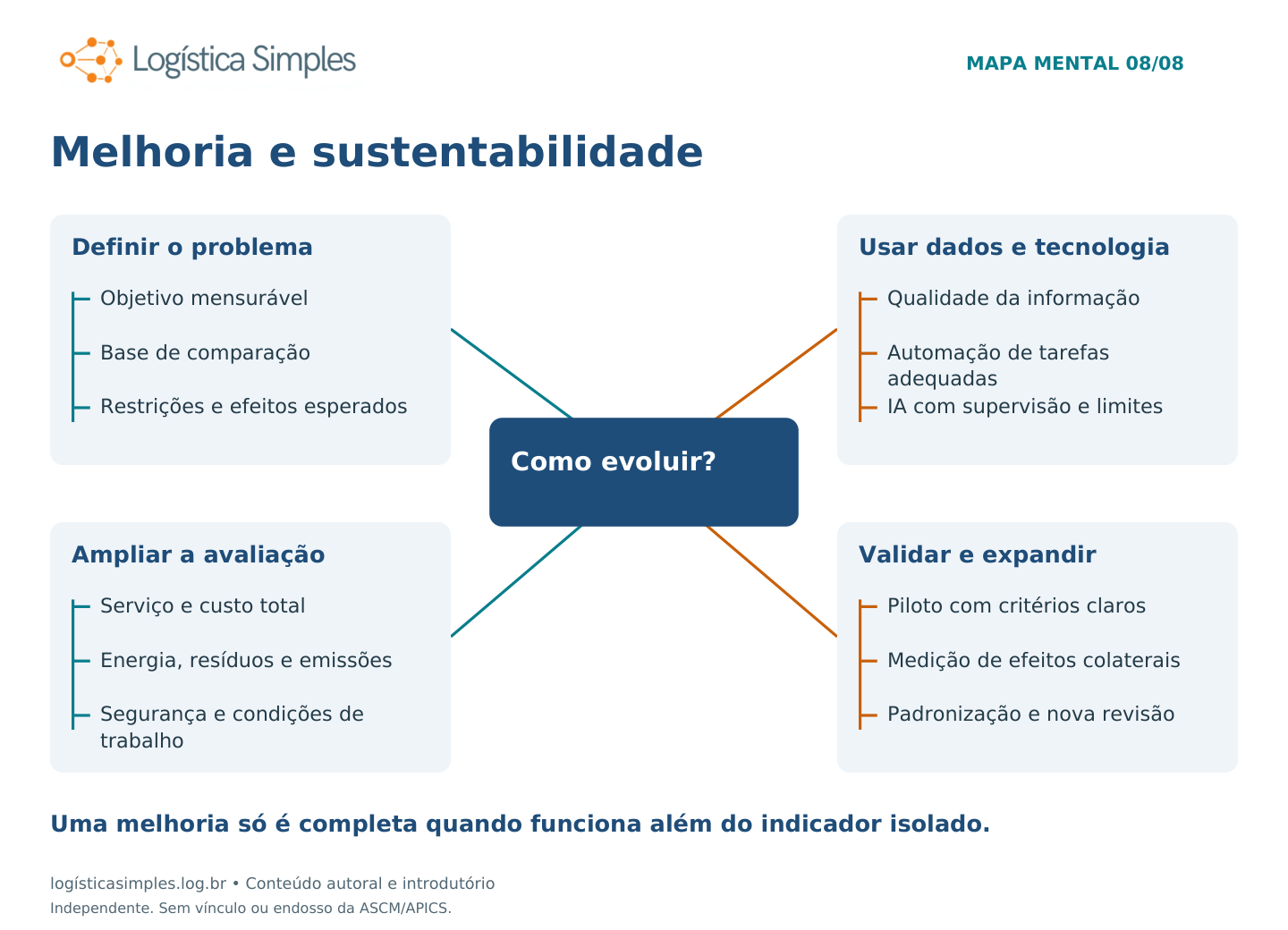
Read the map branches
Define the problem
- Measurable objective
- Comparison baseline
- Constraints and expected effects
Use data and technology
- Information quality
- Automation of suitable tasks
- AI with oversight and limits
Broaden the assessment
- Service and total cost
- Energy, waste and emissions
- Safety and working conditions
Validate and scale
- Pilot with clear criteria
- Measure side effects
- Standardise and review again
An improvement is complete only when it works beyond a single metric.
How to use
Choose a map, explain how its branches connect and apply the central question to a fictional situation. Use the text version for comfortable mobile reading.
Reference for topic correspondence only: public module structure — ASCM Akron. Structure, text and diagrams created for Logística Simples.
Back to Learn for free · View infographics
